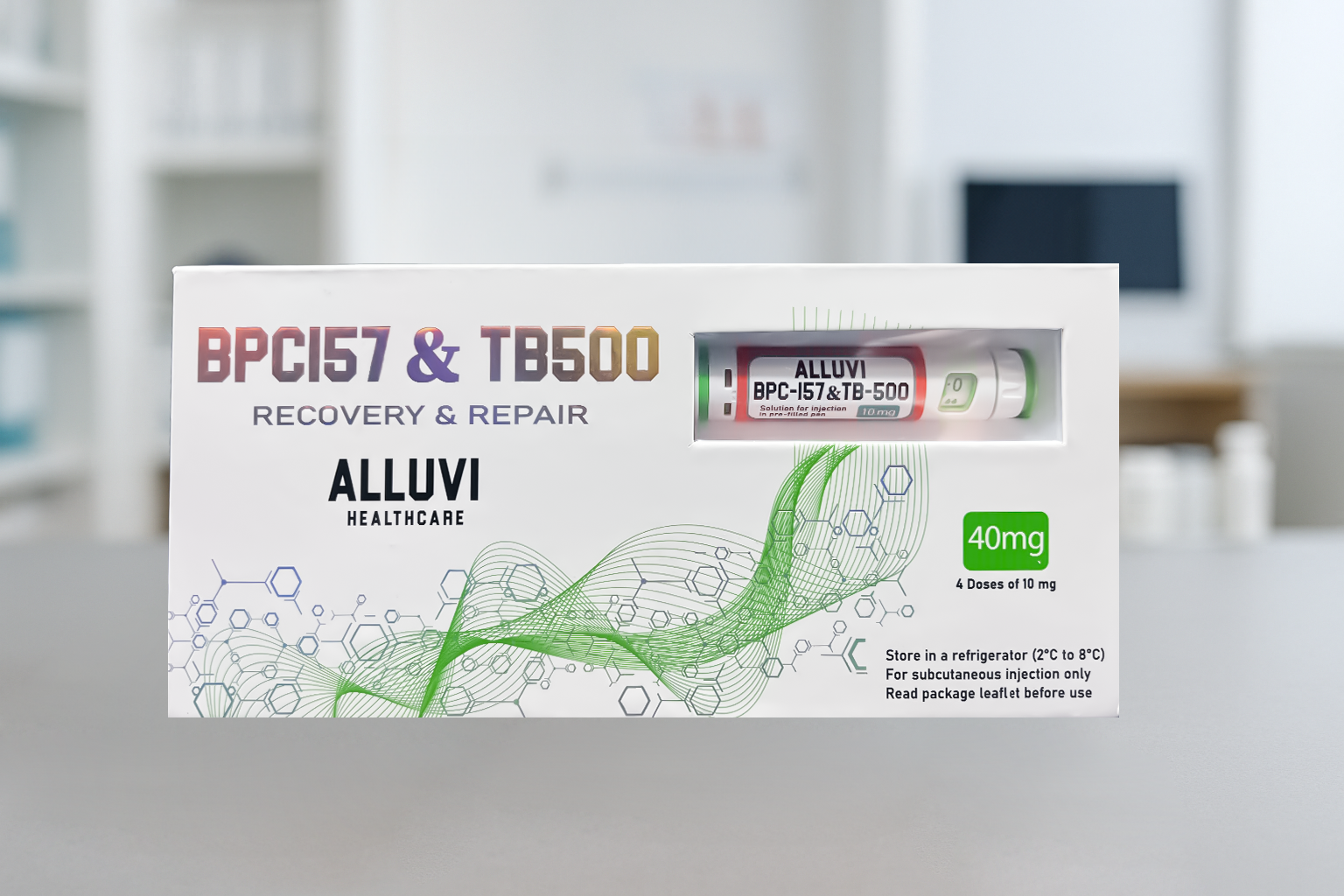
BPC-157 & TB-500 40mg for Research Use Only: Advanced Peptide Research Blend
Introduction: Precision Research for Modern Metabolic Science
As metabolic research evolves, scientists and laboratories are increasingly focused on understanding how tissue recovery, cellular signaling, and metabolic efficiency interact with body composition and energy balance. Rather than relying on superficial solutions, modern research seeks to uncover mechanistic pathways that support the body’s ability to weigh naturally through optimized biological function.
BPC-157 & TB-500 40mg (R&D Only) is a carefully formulated peptide research blend designed exclusively for laboratory and investigational use. This combination is widely studied in controlled research environments for its role in cellular repair, tissue integrity, and metabolic support pathways, all of which are foundational elements in weight regulation research.
This article provides a clear, science-focused overview of how BPC-157 and TB-500 are used in research, their investigated benefits, and why this 40mg blend is a valuable tool for advanced metabolic and recovery-oriented studies.
How BPC-157 & TB-500 Work for Weight Research
It is important to clarify that BPC-157 & TB-500 are not weight-loss products. However, in laboratory research, these peptides are explored for their indirect role in metabolic optimization, particularly through recovery, cellular efficiency, and tissue health.
Research Mechanisms Under Investigation
In controlled studies, researchers examine how this peptide combination may:
-
Support cellular repair and regeneration pathways
-
Improve tissue resilience, allowing sustained metabolic activity
-
Influence inflammation-modulated metabolic signaling
-
Enhance recovery-related processes that impact energy balance
Efficient recovery and tissue function are increasingly recognized as supportive factors in long-term metabolic health, which is why this peptide blend has become relevant in weight-related research models.
Key Ingredients & Their Research Benefits
BPC-157 (Body Protection Compound)
BPC-157 is a synthetic peptide fragment derived from a naturally occurring gastric protein. In research settings, it is studied for:
-
Cellular repair and tissue integrity support
-
Vascular and connective tissue signaling
-
Modulation of stress-related cellular responses
-
Supportive effects on metabolic efficiency in recovery models
Its role in maintaining tissue health makes it relevant for studies examining how recovery influences metabolic performance.
TB-500 (Thymosin Beta-4 Fragment)
TB-500 is a synthetic version of a naturally occurring peptide involved in actin regulation. Research focuses on its ability to:
-
Support cell migration and tissue remodeling
-
Promote structural integrity at the cellular level
-
Assist in recovery-focused metabolic models
-
Enhance adaptability of tissues under metabolic stress
Together, BPC-157 and TB-500 form a complementary research blend used to study resilience-driven metabolic optimization.
Science-Backed Benefits Under Investigation
Although not designed for direct fat loss, laboratory research explores several weight-related biological processes associated with this peptide blend.
Fat Metabolism (Indirect Support)
Studies investigate whether improved tissue recovery may:
-
Support consistent metabolic output
-
Enable sustained fat oxidation in research models
-
Reduce metabolic disruptions caused by tissue stress
Metabolic Efficiency
Researchers evaluate how cellular repair pathways may:
-
Improve nutrient utilization efficiency
-
Support mitochondrial performance
-
Enhance metabolic consistency over time
Energy Regulation
By supporting recovery and reducing cellular strain, research models suggest potential relevance to:
-
Stable energy availability
-
Reduced metabolic inefficiencies
-
Improved adaptability to metabolic demands
Who Should Use BPC-157 & TB-500 40mg
This product is strictly intended for research and development use only and is suitable for:
-
Academic and clinical research laboratories
-
Metabolic and physiology research institutions
-
Recovery and tissue-focused study programs
-
Professionals conducting peptide-based investigations
It is not approved for human consumption and should never be marketed as a supplement or medication.
How to Use It for Best Results (Research Context)
In laboratory environments, BPC-157 & TB-500 40mg is used according to approved research protocols to:
-
Study tissue recovery in metabolic models
-
Investigate cellular signaling pathways
-
Examine recovery-metabolism interactions
Best Research Practices
-
Use only within controlled lab environments
-
Follow institutional and regulatory guidelines
-
Maintain detailed documentation and traceability
-
Clearly label as “R&D Only – Not for Human Use”
Safety, Quality & Compliance Information
Lab-Grade Quality Assurance
High-quality BPC-157 & TB-500 research blends are:
-
Manufactured under controlled laboratory standards
-
Third-party tested for purity and stability
-
Free from unnecessary fillers or contaminants
Regulatory Compliance
Reputable research suppliers ensure:
-
Proper labeling for research use only
-
Transparent sourcing and testing documentation
-
Compliance with institutional research requirements
These measures protect both research integrity and institutional credibility.
Realistic Results & Expectations
Researchers should maintain realistic expectations when working with this peptide blend:
-
Findings are model-specific and not consumer outcomes
-
Results focus on cellular and metabolic insights, not rapid fat loss
-
Long-term, controlled studies are required for meaningful conclusions
Scientific rigor and patience are essential when evaluating metabolic relevance.
Comparison vs Other Weight-Related Research Compounds
| Feature | BPC-157 & TB-500 | Stimulant-Based Research Agents |
|---|---|---|
| Primary Focus | Recovery & cellular integrity | Appetite or energy stimulation |
| Research Value | Long-term metabolic insight | Short-term metabolic disruption |
| Mechanism | Physiological support pathways | Artificial metabolic pressure |
| Sustainability | High for research models | Limited consistency |
Frequently Asked Questions (FAQ)
1. Is BPC-157 & TB-500 a weight-loss product?
No. It is a research-only peptide blend used to study recovery and metabolic support mechanisms.
2. Why is recovery relevant to weight research?
Efficient recovery supports consistent metabolic activity and energy regulation in research models.
3. Is this product safe?
Safety applies only within controlled laboratory environments following proper protocols.
4. Can this replace diet or exercise research models?
No. It is used alongside comprehensive metabolic research frameworks.
5. Who is allowed to purchase this product?
Licensed researchers and institutions only.
6. Are results immediate?
No. Research outcomes require time, consistency, and controlled conditions.
Final Verdict / Call-to-Action
BPC-157 & TB-500 40mg for Research Use Only represents a premium-grade peptide blend for laboratories exploring the intersection of recovery, cellular integrity, and metabolic efficiency. By supporting foundational biological processes, this research tool helps scientists better understand how the body may weigh naturally through optimized physiological function.
For institutions committed to credible, forward-thinking metabolic research, this blend delivers purity, precision, and scientific value.
Advance research responsibly. Choose lab-grade peptides. Build the future of metabolic science.